Presbyopia: Understanding Age-Related Near Vision Loss
Article by: seoteam seoteam Last updated: 14 July 2026

Presbyopia is one of the most common vision changes adults experience, and if you have recently found yourself squinting at your phone or holding a menu at arm's length, you are far from alone. This natural, age-related condition affects the eye's ability to focus on objects up close, gradually making everyday tasks like reading small text or threading a needle surprisingly difficult. Unlike other refractive errors that develop from childhood, presbyopia affects virtually everyone over time.
Understanding what presbyopia is, when it starts, and how it can be corrected is the first step toward protecting your vision and quality of life.
Highlight
- Presbyopia is a natural, age-related loss of near focusing flexibility that universally affects individuals starting around age 40.
- Common presbyopia symptoms include a headache, eye strain, and presbyopia reading small text difficulty without extended arms.
- The primary causes of presbyopia stem from the gradual hardening of the eye's natural crystalline lens over time.
- While it cannot be reversed, it is highly manageable using corrective glasses, contact lenses, or advanced refractive surgical options.
- Regular comprehensive eye examinations are essential for diagnosing bilateral presbyopia and maintaining overall long-term ocular health.
Table of Content
What Is Presbyopia?
Presbyopia is an age-related eye condition in which the crystalline lens inside the eye gradually loses its flexibility, making it increasingly difficult to focus clearly on near objects. In a young, healthy eye, a small ring of muscles called the ciliary muscles contracts or relaxes to change the shape of the lens, allowing it to shift focus between near and distant objects. This process is known as accommodation.
Over time, the lens becomes progressively stiffer and less elastic. As a result, even when the ciliary muscles work normally, the lens simply cannot curve enough to bring close-up images into sharp focus. This is what causes the characteristic blurry vision up close that defines the presbyopic eye.
When you develop presbyopia of both eyes, also referred to clinically as bilateral presbyopia, you will notice you can't see close up without pushing reading materials further away. It is important to realize that this is not a disease, but rather a universal physiological change. No matter how perfect your eyesight was during youth, everyone eventually experiences some degree of this condition as they cross into middle age.
At What Age Does Presbyopia Start?
When does presbyopia start is one of the most frequent questions eye care professionals encounter. For the vast majority of adults, the initial signs of presbyopia begin to surface around the age of 40. You might first notice that you are holding books, smartphone screens, or grocery labels at arm's length just to decode the text.
This condition progresses predictably, meaning your near vision steadily worsens from your early 40s until your mid-60s. During this window, the age for reading glasses becomes a primary topic during routine checkups. After around age 65, the changes inside the lens typically stabilize, though the need for visual correction remains permanent.
What Are the Symptoms of Presbyopia?
Recognizing the early signs of presbyopia can help you seek timely corrective solutions before daily eye strain interferes with your productivity. Here are the hallmark presbyopia symptoms to watch out for
- Reading small text difficulty: A persistent struggle to read small print, which becomes significantly worse in dimly lit environments.
- Blurred vision at normal reading distance: Noticing that your vision blurry up close unless you consciously stretch your arms out to extend the reading distance.
- The “eyes don't want to focus” sensation: Feeling like your eye slows to focus when switching your gaze quickly between close-up tasks and distant objects.
- Frequent presbyopia headache: Experiencing dull, aching headaches or physical eye fatigue after engaging in prolonged close-up work like typing, knitting, or reading.
- Experiencing a can't see up close or far away overlap: Finding that your existing vision issues are complicated by a new, frustrating inability to see nearby items clearly.
What Causes Presbyopia?

To fully grasp what causes presbyopia, it helps to look closely at the internal mechanics of the human visual system. Unlike other refractive errors, the root causes of presbyopia are entirely structural and chronological.
- Hardening of the Crystalline Lens: Over decades, the proteins within the eye's natural lens change, causing the lens to become significantly stiffer and less elastic.
- Loss of Accommodative Flexibility: Because the aging lens becomes rigid, it can no longer easily curve or steepen its shape to focus light from nearby objects directly onto the retina.
- Weakening Ciliary Muscles: The tiny muscular structures responsible for reshaping the lens also experience age-related efficiency losses, contributing to why the eyes don't want to focus.
- Natural Cell Accumulation: The eye continuously produces new lens cells throughout life without shedding old ones, which naturally compacts the lens structure and drives the underlying presbyopia causes.
Presbyopia vs Hyperopia: What's the Difference?
Many people ask, is presbyopia farsightedness? While both conditions share the symptom where a person can't see close up, they are caused by entirely different anatomical mechanisms.
| Feature |
Presbyopia |
Hyperopia (Farsightedness) |
| Cause |
Age-related loss of lens flexibility and hardening of the internal lens structure. |
An eyeball that is structurally too short, or a cornea that possesses too little curvature. |
| Condition |
Universally occurs after age 40 due to natural chronological aging. |
Typically present at birth or develops during early childhood/adolescence. |
| Visual Impact |
Specifically impairs near vision while distant vision can remain perfectly intact. |
Severe cases impair near vision, and can eventually blur distance vision if uncorrected. |
| Correction |
Reading glasses, bifocals, multifocal contacts or IOLs. |
Corrective lenses (glasses or contacts), laser surgery. |
In short, hyperopia is a structural refractive error you are born with, while presbyopia is an age-related change in the eye's focusing mechanism. It is also possible to have both conditions simultaneously, which your eye doctor can identify and address with the appropriate prescription.
How Is Presbyopia Diagnosed?
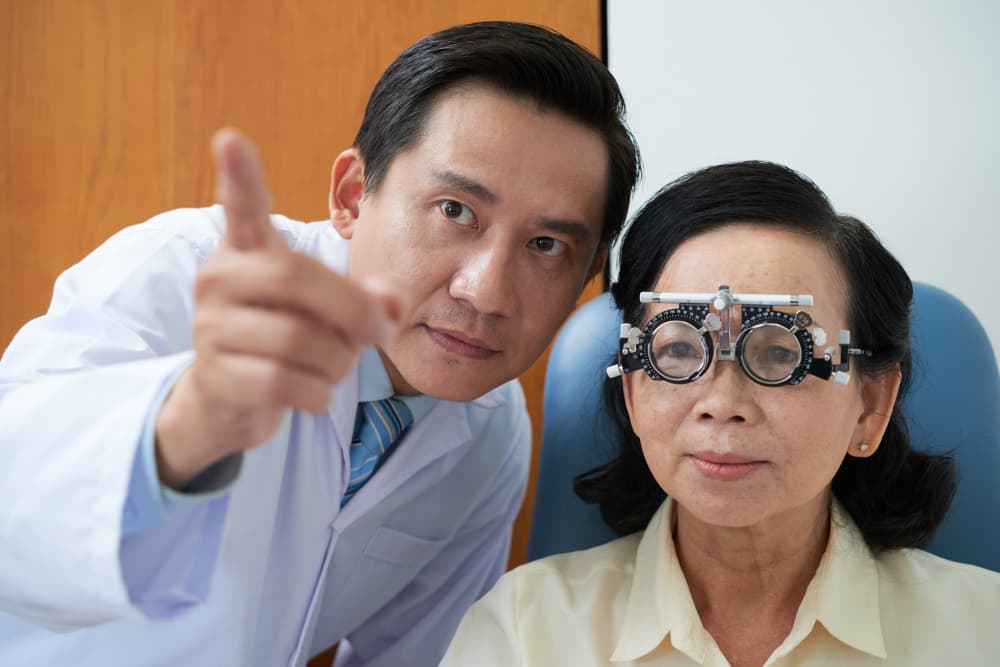
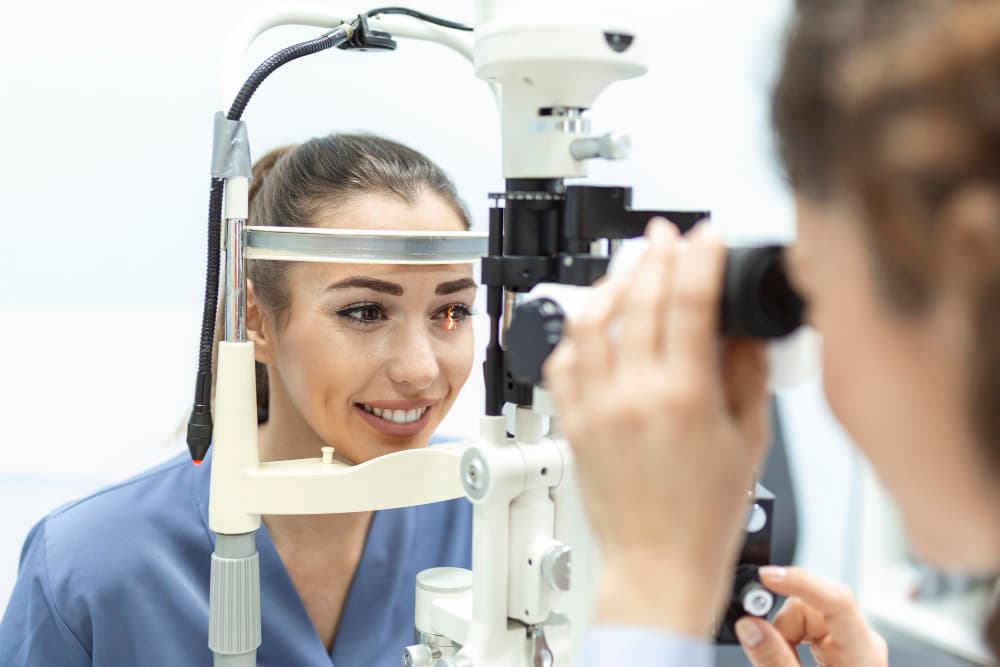
Presbyopia is diagnosed through a routine, comprehensive eye exam. No special testing is required; presbyopia is typically identified during a standard refraction, which is the part of the exam where your eye doctor determines what prescription, if any, you need to see clearly.
During the exam, your doctor will assess both distance and near vision, and may dilate your pupils to get a clearer view of the lens and other internal structures of the eye. A near-vision reading card is used to identify the closest distance at which you can see small print clearly without straining. If any opacity or cloudiness is detected in the lens, your doctor may also screen for early cataract development, as this can occur alongside presbyopia in older adults.
If you notice sudden changes in near vision, significant eye strain, or persistent headaches, do not wait for your scheduled exam. Seek an evaluation sooner, as these symptoms can occasionally indicate other underlying eye conditions that should be ruled out.
How Is Presbyopia Treated?
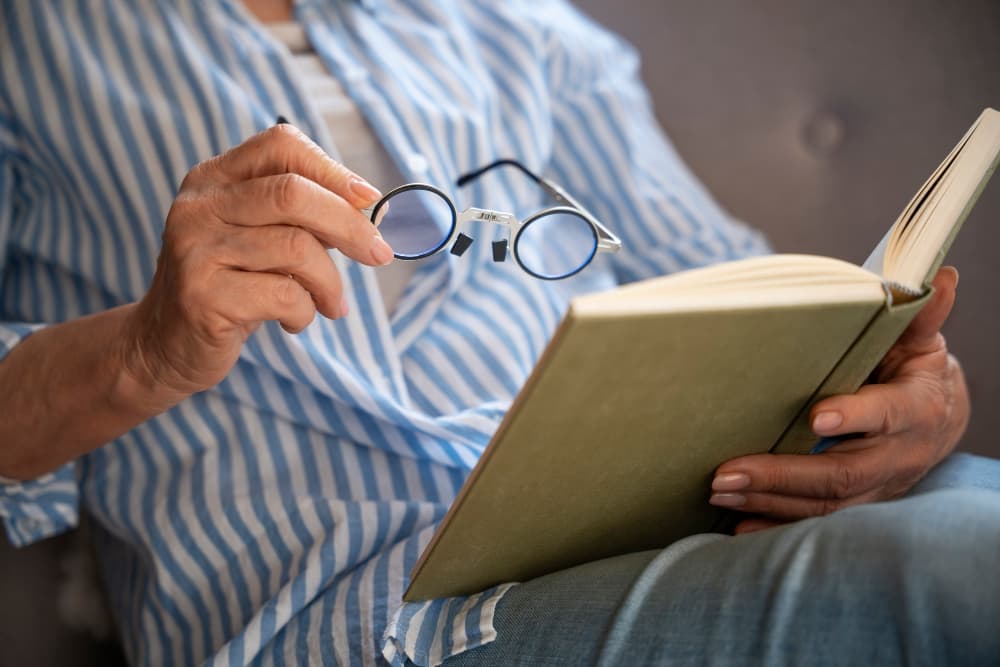
Managing your daily near vision demands involves choosing a tailored corrective strategy that aligns with your professional routine, hobbies, and personal comfort preferences.
Prescription Reading Glasses and Bifocals
For individuals who previously enjoyed perfect distance vision, simple single-vision reading glasses are often the quickest solution. If you already cope with myopia, your doctor can prescribe bifocals, trifocals, or progressive lenses. Progressive lenses offer a smooth, seamless visual transition from distance viewing at the top down to close-up reading power at the bottom, eliminating the harsh lines found in traditional bifocals.
Specialized Contact Lenses
If you prefer an active lifestyle without frames, you might wonder “can you wear contacts for presbyopia?” The answer is absolutely yes. Modern optical technology offers multifocal contact lenses that contain multiple zones of power within a single lens. Alternatively, your optometrist might recommend a “monovision” strategy, where one eye wears a contact lens optimized for distance vision, while the other eye wears a lens adjusted specifically for near focus.
Refractive Laser Surgery
For a more permanent reduction in your dependency on eyewear, laser vision correction options are widely available. Procedures such as Monovision LASIK or PRK permanently reshape the corneal tissue of your eyes.
Similar to monovision contact lenses, the surgeon corrects your dominant eye for crisp distance vision and leaves the non-dominant eye slightly adjusted for close-up viewing. Rather than blending the two images together, the brain learns to suppress the blurrier eye's input depending on the task, automatically favoring the distance eye when looking far away and the near eye when reading up close.
Advanced Lens Replacement (RLE)
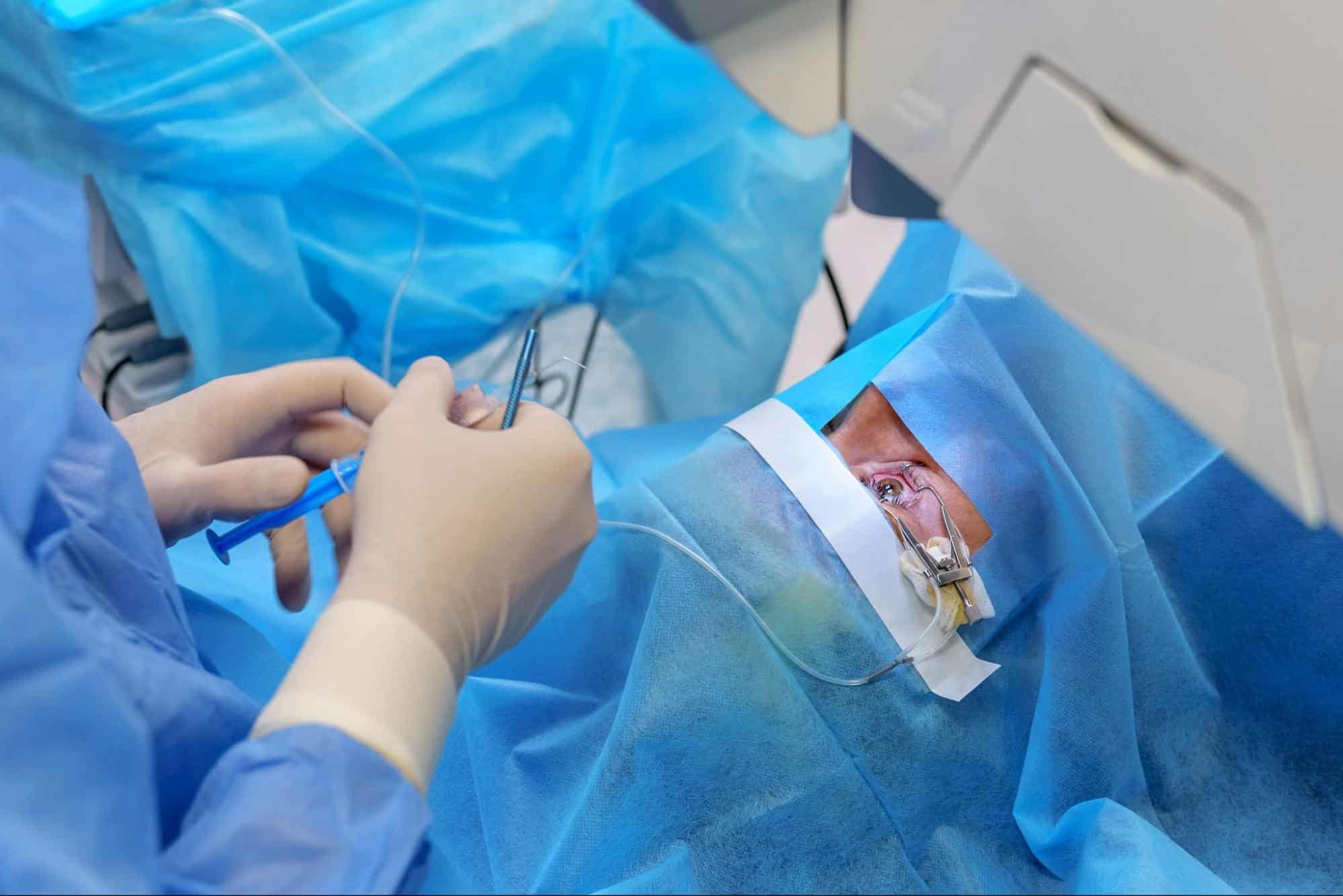
For patients who are approaching the age where a natural cataract is likely to form, Refractive Lens Exchange (RLE) is an excellent long-term therapeutic route. This procedure mimics modern cataract surgery by utilizing advanced Phaco (phacoemulsification) technology to gently break up and remove the aging, rigid natural lens.
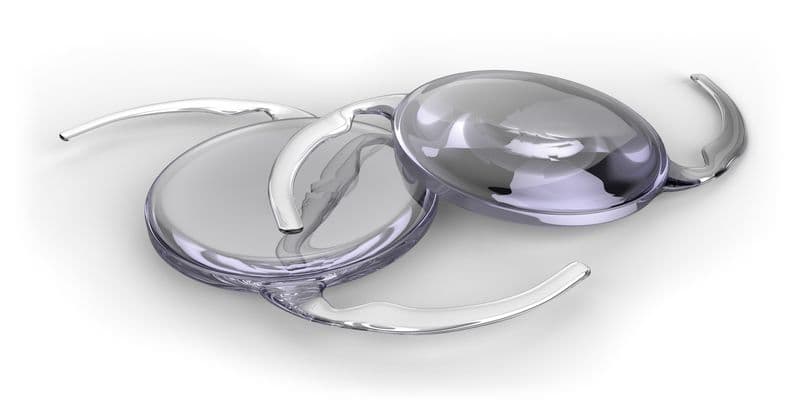
In its place, the surgeon implants premium Intraocular Lenses (IOLs), such as multifocal or extended depth of focus lenses, which permanently correct both near and distance vision. Because the natural lens has been removed, a true cataract cannot form again in that eye, though some patients may later develop posterior capsule opacification (a cloudy membrane behind the new lens, sometimes called a "secondary cataract"), which is easily treated with a quick outpatient laser procedure.
Can Presbyopia Be Cured or Reversed?
No, there is currently no clinically proven way to permanently cure or reverse the natural biological aging of the internal crystalline lens. Once the proteins inside the lens harden, they cannot be restored to their original youthful elasticity.
However, even though it cannot be reversed, it can be reliably, safely, and highly effectively corrected. Through a custom combination of specialized glasses or contact lenses, targeted laser treatments, or state-of-the-art lens replacement surgeries, you can completely overcome the limitations of reading vision loss and enjoy crisp, seamless focus at every distance.
Conclusion
Presbyopia is a normal and universal part of aging that causes progressive difficulty with near vision, typically starting around age 40 and continuing into the mid-60s. It is caused by the natural stiffening of the eye's crystalline lens, and unlike myopia or hyperopia, it affects everyone regardless of their prior vision history.
The most important step is to have your eyes examined regularly so that presbyopia is identified early and managed appropriately. If you have noticed changes in your near vision, the experienced ophthalmology team at Samitivej Chinatown Hospital is here to help. Book a comprehensive eye exam today and get the clear, comfortable vision you deserve at every age.
Frequently Asked Questions (FAQs)
Does everyone get presbyopia?
Yes. Presbyopia is a universal age-related condition. Virtually everyone will develop it to some degree by their mid-40s to early 50s. The timing and rate of progression may vary slightly between individuals, but no one is exempt from the underlying lens changes that cause it.
Is presbyopia nearsighted or farsighted?
Presbyopia is neither nearsightedness nor farsightedness in the traditional sense, though its effect on vision resembles farsightedness. It is caused specifically by a loss of lens flexibility with age, not by the shape of the eye. It is possible to have presbyopia alongside both myopia (nearsightedness) and hyperopia (farsightedness) at the same time.
What's the difference between presbyopia and myopia?
Myopia represents classic nearsightedness, a refractive error where individuals see close-up objects clearly but experience extreme blurriness when looking at things in the distance. Conversely, this age-related condition impairs your near focusing power, meaning someone with underlying myopia might find themselves removing their distance glasses just to read comfortable text up close.
Is presbyopia the same as astigmatism?
No, they are completely separate optical issues. While this condition relates to the loss of flexibility within the eye's internal lens due to aging, astigmatism is caused by an irregular, asymmetrical curvature of the front surface of the eye, which distorts light rays and causes blurred vision at all distances.