Total Knee Arthroplasty: Procedure, Possible Risks & Recovery
Article by: seoteam seoteam Last updated: 10 August 2026
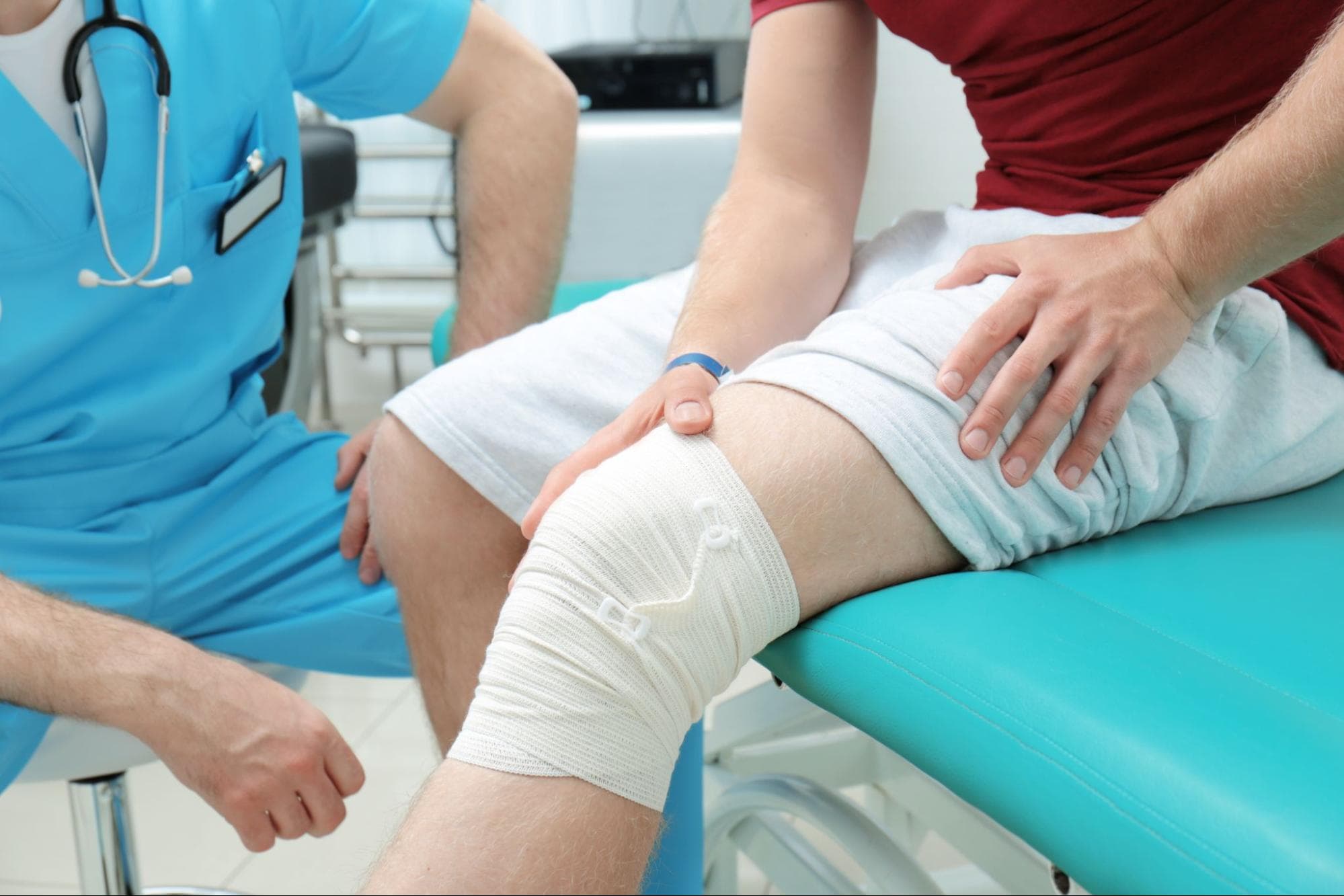
Living with chronic, severe knee pain can turn simple daily tasks into monumental challenges. Total Knee Arthroplasty (TKA), commonly known as total knee replacement, is an established surgical treatment that can significantly reduce severe knee pain and improve mobility when nonsurgical treatments are no longer effective.
This comprehensive guide explores everything from structural components and modern surgical technologies to candidacy, procedural steps, and recovery pathways.
Highlight
- Total Knee Arthroplasty resurfaces all three compartments of a severely damaged knee using metal and plastic components, offering a permanent fix where partial replacements or conservative therapies fail.
- Modern pre-operative planning incorporates digital imaging and robotic assistance to customize implant sizing, perfectly restore the leg’s mechanical axis, and achieve flawless ligament balance.
- While arthroplasty knee drastically improves mobility and quality of life for individuals over 50, surgeries may be delayed due to active infections, severe osteoporosis, or uncontrolled chronic illnesses.
- Modern knee implants are engineered to endure for 15 to 20 years, provided patients adhere to low-impact exercises and proactively follow the surgeon’s activity recommendations and generally avoid repetitive high-impact activities that may accelerate implant wear.
Table of Content
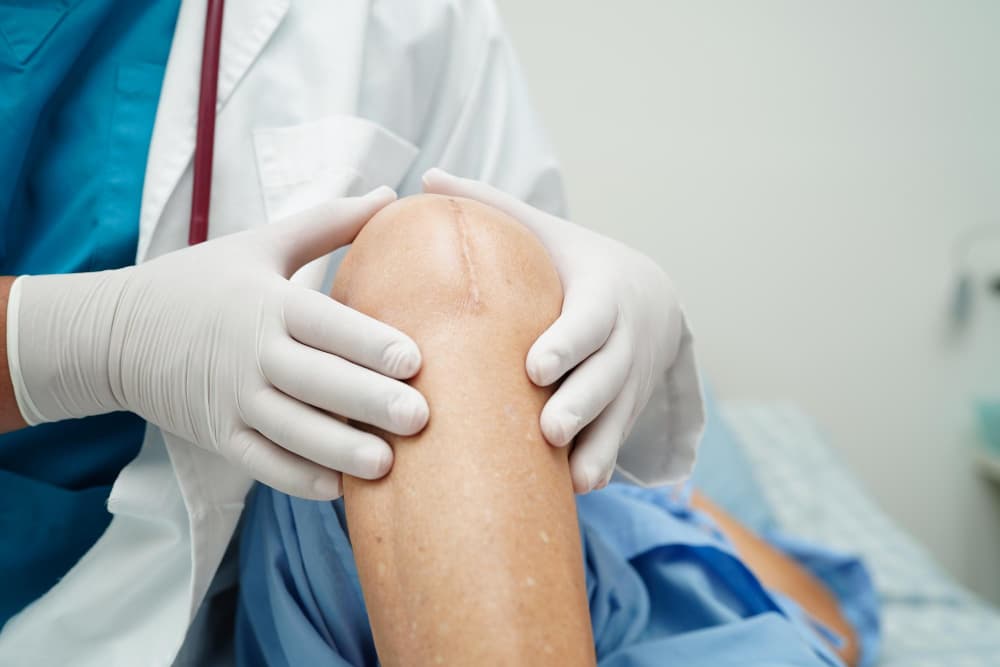
Total Knee Arthroplasty (TKA), or total knee replacement (TKR surgery ), is a major surgical procedure designed to resurface a knee severely damaged by arthritis or injury. The surgeon caps the damaged bone ends and kneecaps with metal and plastic implants, effectively relieving chronic pain and restoring mobility when non-surgical treatments fail.
Knee replacement surgery is not a one-size-fits-all procedure but it encompasses several approaches tailored to the extent of joint damage, with Total Knee Arthroplasty (TKA) being the most comprehensive option.
|
Procedure
|
What Is Replaced?
|
Best Suited For
|
|
Total Knee Arthroplasty (TKA)
|
All three compartments of the knee joint.
|
Severe, widespread arthritis or extensive joint damage.
|
|
Partial Knee Arthroplasty (PKA)
|
Only one damaged compartment (unicompartmental).
|
Early-stage arthritis confined to a single area.
|
|
Revision Knee Arthroplasty
|
Corrects or replaces a failing previous implant.
|
Patients with worn-out, loose, or infected old implants.
|
While partial replacements target isolated damage to preserve healthy tissue, TKA offers a total joint overhaul, making it a commonly considered surgical option for widespread, advanced knee degeneration.
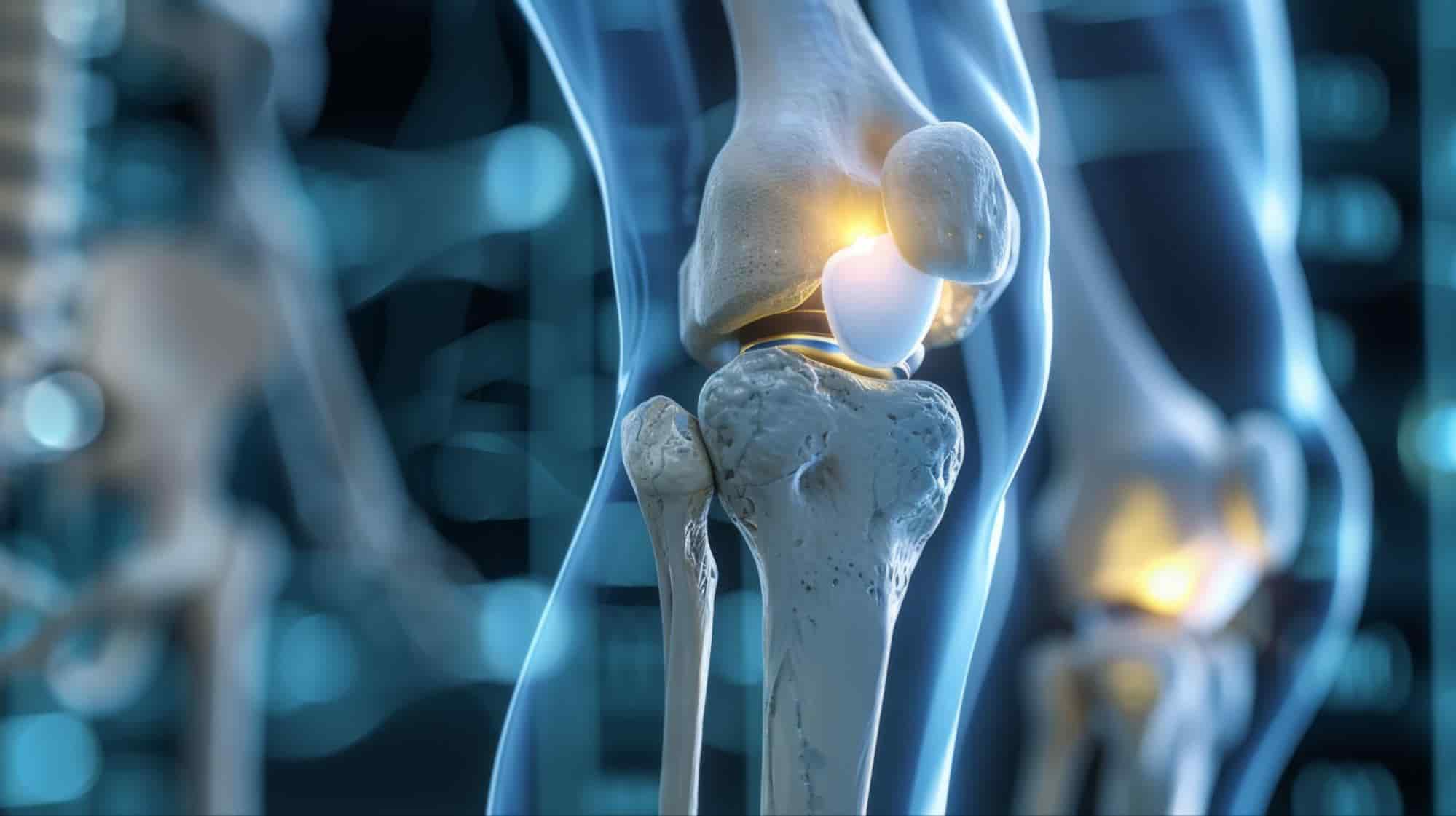
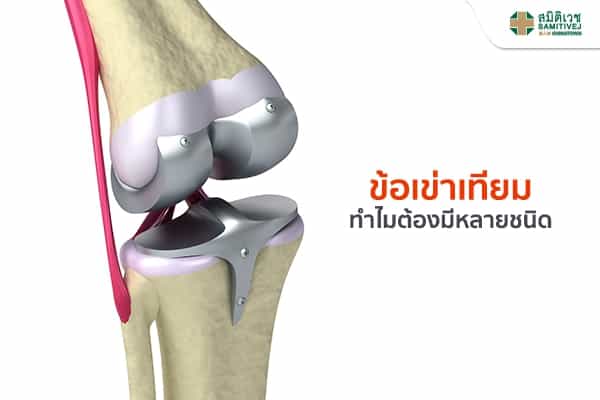
A total knee replacement generally uses a femoral component, a tibial component, and a polyethylene insert. An additional plastic patellar component may be used when the surgeon decides to resurface the underside of the kneecap. These high-tech parts work seamlessly together to replace damaged surfaces, restore smooth motion, and eliminate chronic pain.
Femoral Component
This metal piece caps the end of your thighbone (femur), mimicking its natural curves. Typically crafted from scratch-resistant cobalt-chromium, it provides an exceptionally durable surface with excellent long-term success rates. Femoral components are commonly made from wear-resistant metal alloys, such as cobalt-chromium, although the exact material and surface technology vary between implant systems.
Tibial Component
Anchored directly to the top of your shinbone (tibia), this flat metal platform holds the plastic joint spacer securely in place. It is engineered from either premium titanium or cobalt-chromium alloys to maximize stability, though some variations are fabricated entirely out of heavy-duty clinical plastic.
Polyethylene Insert
Serving as your resilient new cartilage, This medical-grade polyethylene insert forms the bearing surface between the femoral and tibial components. In many implant designs, it locks onto a metal tibial tray, while other designs use different bearing or fixation configurations
Patellar Component
Often referred to as the patellar "button," this dome-shaped plastic piece resurfaces the damaged underside of your kneecap (patella) to ensure it glides smoothly against the femoral component. Its implementation is optional, depending entirely on your orthopedic surgeon's clinical assessment of your kneecap's condition.
Successful Total Knee Arthroplasty relies on meticulous pre-operative planning. Rather than just assessing structural joint damage, orthopedic surgeons must comprehensively evaluate your overall health, bone morphology, leg alignment, and surrounding soft tissue balance.
Medical Evaluation and Imaging
Planning Total Knee Arthroplasty treatment begins with an exhaustive medical screening to ensure you are healthy enough for anesthesia and recovery. Pre-operative assessment usually includes a physical examination and knee X-rays to evaluate joint damage, deformity, and alignment. CT or other advanced imaging may be used for selected complex cases or certain robotic and patient-specific planning systems.
Implant Sizing and Positioning
Surgeons analyze your pre-operative imaging to select the optimal implant dimensions tailored to unique anatomy. Precise sizing prevents the artificial components from being too small or overhanging the bone, ensuring stable positioning that seamlessly matches your natural skeletal proportions and preserves native bone.
Knee Alignment and Ligament Balance
Surgeons carefully calculate how to restore the leg’s natural mechanical axis, correcting conditions like bowlegs or knock-knees. Simultaneously, they plan meticulous soft tissue releases to ensure surrounding ligaments are perfectly balanced, providing optimal stability and a fluid, natural range of motion during daily activities.
Modern TKA incorporates advanced engineering and digital innovations to optimize joint longevity. Beyond choosing the right implant size, surgeons must select the ideal fixation method and surgical technology to ensure maximum procedural precision.
Cemented and Cementless Knee Implants
Cemented implants use fast-setting bone cement to glue components to the bone, offering immediate stability. Conversely, cementless implants feature a porous surface that encourages your natural bone to grow into the device over time.
Cemented and cementless fixation are both established options. The choice depends on bone quality, patient characteristics, implant design, and the surgeon’s assessment; current evidence does not show that one method is universally superior for all patients.
Conventional, Computer-Navigated and Robotic-Assisted TKA
Conventional TKA uses specialized cutting guides, anatomical landmarks, pre-operative imaging, and intraoperative assessment to position the components. Computer navigation and robotic systems provide additional digital measurements and guidance. Computer navigation adds real-time tracking screens to improve anatomical alignment.
Taking precision further, robotic-assisted technology uses pre-operative 3D modeling and specialized robotic arms to help the surgeon execute the pre-operative plan and may improve the accuracy and consistency of bone preparation and component positioning. However, improved technical accuracy does not necessarily guarantee better long-term clinical outcomes.
Total Knee Arthroplasty is recommended for individuals experiencing debilitating joint damage that severely restricts mobility and diminishes overall quality of life.
- Severe Persistent Pain: Patients suffering from intense knee pain during daily activities like walking, climbing stairs, or standing and even while at rest.
- Failed Conservative Treatments: Individuals who find no relief from medications, physical therapy, or injections, or continue to have significant symptoms despite appropriately supervised medications, physical therapy, injections, or other nonsurgical treatments.
- Advanced Joint Degeneration: Patients with extensive cartilage loss, significant knee deformity, persistent stiffness, or structural joint damage that substantially limits daily function.
- Patient Factors: There is no single age cutoff for TKA. Surgery is considered primarily according to the severity of pain and disability, the extent of joint damage, overall health, activity expectations, and whether appropriate nonsurgical treatments have failed.
While Total Knee Arthroplasty offers profound pain relief, certain medical conditions jeopardize surgical safety and implant longevity. In these scenarios, postponing the procedure is essential to optimize patient health and prevent catastrophic failure.
- Any ongoing bacterial infection in the body or surrounding skin must be completely eradicated to prevent pathogens from contaminating the new artificial joint.
- Severe bone loss or untreated metabolic bone disease may affect implant fixation and increase the risk of complications. Additional assessment, treatment, or modification of the surgical plan may be required before proceeding.
- Unstable or poorly controlled medical conditions, such as significant cardiovascular, kidney, or metabolic disease, may increase perioperative risks. These conditions should be evaluated and optimized with the relevant specialists before elective surgery.
Total Knee Arthroplasty is performed in a hospital or surgical center under anesthesia. Depending on the patient’s health, recovery, and care plan, some patients may go home on the same day, while others may stay in the hospital overnight or longer. Every stage is meticulously executed to ensure maximum patient safety, pristine joint alignment, and optimal long-term implant functionality.
- Preparation and Anesthesia: You change into a gown, an IV line is established, and the anesthesia team monitors your vital signs and administers general, spinal, or regional anesthesia according to the agreed anesthetic plan.
- Surgical Incision and Cleansing: The surgical site is shaved and thoroughly sterilized with an antiseptic solution before the orthopedic surgeon makes a precise incision over the knee area.
- Joint Resurfacing and Implantation: Damaged cartilage and bone surfaces are removed; the femoral and tibial components are positioned and secured, and a polyethylene insert is placed between them. The underside of the patella may also be resurfaced with a plastic component when clinically appropriate.
- Closure and Dressing: The surgical incision is closed with stitches or staples, the incision is closed and covered with a sterile dressing. A drain is generally not required routinely but may be used in selected circumstances according to the surgeon’s judgment.
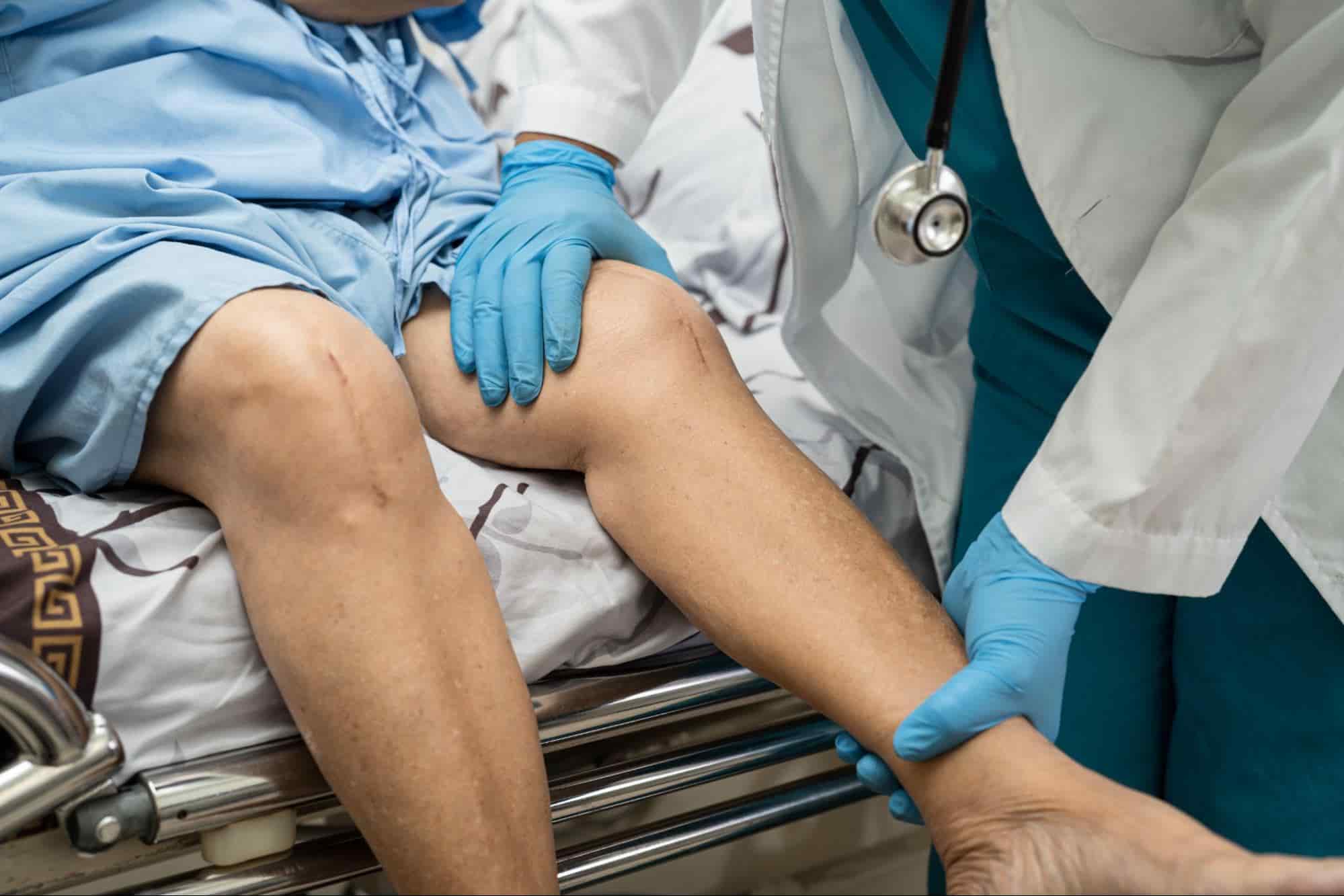
While Total Knee Arthroplasty boasts an exceptional success rate, achieving optimal results depends heavily on individual patient profiles, diligent postoperative care, and the proactive management of potential surgical risks.
Possible Benefits of TKA
- Pain Relief: Can substantially reduce severe arthritic pain, including pain during activity and at rest, although some patients may continue to experience discomfort after surgery.
- Restored Joint Mobility: Significantly enhances knee flexibility and alignment, allowing patients to bend and straighten their legs smoothly.
- Improved Quality of Life: Restores the independence needed to perform basic everyday tasks like walking, climbing stairs, and driving.
Possible Risks and Complications
- Infections: Infection may involve the skin incision or the deeper tissues around the implant. Superficial infections may respond to antibiotics, while deep periprosthetic infections can require additional surgery and, in some cases, removal or revision of the implant.
- Blood Clots (DVT): Reduced mobility after surgery can cause risks of knee replacement surgery such as dangerous blood clots to form in the deep leg veins.
- Knee stiffness: Scar tissue may limit the range of motion and, in some patients, require additional treatment.
- Implant-related problems: Components may wear, loosen, become unstable, or require revision over time.
Factors That May Influence the Result
- Patient Age and Activity: Younger, active patients may experience faster initial knee replacement recovery but face a higher long-term risk of implant wear.
- Pre-existing Health Conditions: Uncontrolled systemic diseases like diabetes, severe osteoporosis, or obesity can significantly impair tissue healing.
- Rehabilitation Compliance: Dedication to physical therapy and adhering to strict postoperative guidelines are crucial for restoring full joint function.
Post-operative rehabilitation focuses on restoring full joint functionality and independence. Rehabilitation goals are individualized but generally include improving knee extension and flexion sufficiently for walking, transfers, stairs, and other daily activities. The achievable range of motion varies according to pre-operative mobility and the patient’s recovery.
Physical therapy aims to rebuild quadriceps strength, improve balance, prevent joint stiffness, and ensure a safe return to unassisted walking and everyday activities.
Modern knee implants are designed to function for many years, and many remain effective for 15 to 20 years or longer. Implant longevity varies between individuals and depends on factors such as implant type, fixation, activity level, body weight, infection, and overall health.
To maximize longevity, patients should stick to low-impact activities like swimming or cycling while avoiding high-impact sports. However, if the implant loosens, wears down, or develops a chronic infection over time, a secondary procedure called Revision TKA is considered to replace the worn components.
Total Knee Arthroplasty stands as one of modern medicine's most successful orthopedic surgeries, transforming lives by replacing worn-out joint surfaces with highly durable implants. By understanding the components, surgical advancements, and the critical role of post-operative physical therapy, patients can develop realistic expectations about the potential benefits, possible risks, and rehabilitation involved. For appropriately selected patients, TKA can provide substantial pain relief and meaningful improvements in mobility and daily function.
If chronic knee pain is holding you back, the orthopedic specialists at Samitivej Chinatown Hospital are ready to help you move freely again. Offering advanced diagnostics, personalized TKA surgical planning, and comprehensive rehabilitation programs, our dedicated team ensures world-class care right in the heart of Bangkok, helping you safely restore your ultimate mobility.
When Should You Contact Your Medical Team?
Contact your medical team promptly if you experience increasing wound redness or drainage, persistent fever, worsening knee pain, new calf swelling or tenderness, chest pain, or sudden shortness of breath.
Are total knee arthroplasty and total knee replacement the same?
Yes. Total Knee Arthroplasty is simply the medical term for total knee replacement. Both terms describe the exact same surgical procedure used to resurface a severely damaged knee joint.
Is the kneecap always replaced during TKA?
No, it is optional. Patellar resurfacing practices vary. The surgeon may resurface the underside of the kneecap or retain it based on the implant system, the condition of the patella, the surgical approach, and patient-specific factors.
What is the difference between cemented and cementless TKA?
Cemented TKA uses fast-curing bone cement for immediate implant fixation. Cementless TKA relies on a specialized porous surface that allows your natural bone to gradually grow into and secure the implant.
Is robotic-assisted TKA a different type of knee replacement?
Robotic-assisted TKA is not a separate type of joint replacement; it is a technology used to assist with planning and execution. The implant options and workflow depend on the robotic system. Robotics may improve the accuracy of planned component positioning, but it does not guarantee better outcomes for every patient
What is revision total knee arthroplasty?
Revision TKA is a secondary, more complex surgery performed to correct a failing artificial joint. It involves removing worn-out, loose, or infected original components and replacing them with specialized new implants.